Floor Refinishing vs. Replacement: Which Is Right for You?
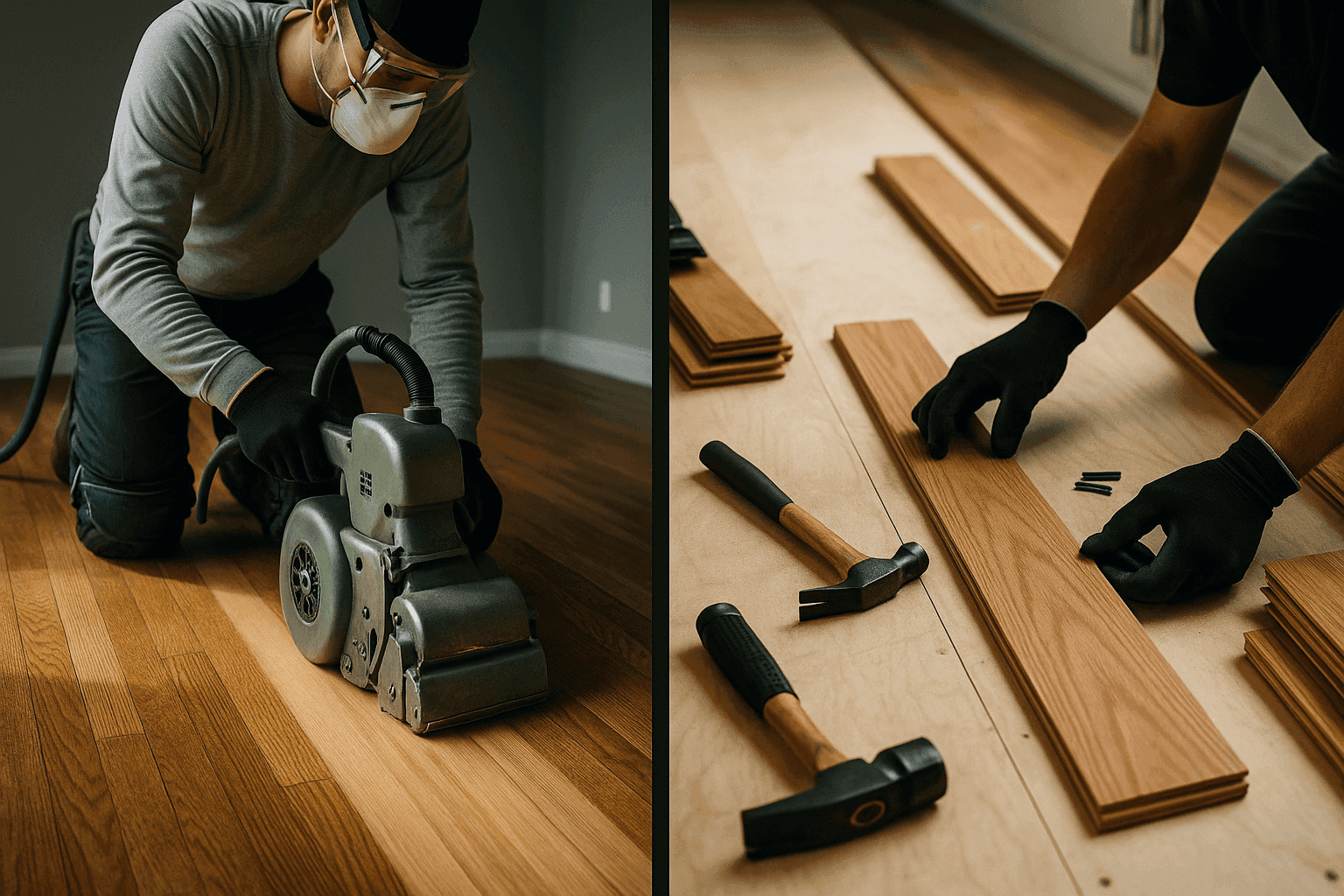
Every floor tells a story. Maybe yours has survived muddy boots, leaky dog bowls, and more than one dropped pan. But now those scratches, dents, and stains are impossible to ignore. Does your floor need a fresh start—or just a fresh finish?
At Tianze Flooring, we know this decision isn’t just about looks. It’s about safety, value, and the heart of your home. Let’s break down how to decide between refinishing and replacing your floors—so you can make the right call with confidence.
How to Assess Floor Damage
Start with a walk-through. Shoes off. Take a close look, and run your hand over the surface. Notice any soft spots? Warping or cupping? Are stains just surface-deep, or do they run through the wood or laminate?
Here’s what to look for:
- Surface Scratches: Minor scuffs or dullness usually only affect the finish.
- Deep Gouges: If you feel a groove with your fingertip, check if it’s just in the top layer or deeper.
- Stains & Discoloration: Water marks or dark spots can mean trouble below the surface.
- Cupping or Buckling: Boards that curl up at the edges or bulge in the middle often signal moisture issues.
- Loose or Noisy Boards: A little creaking is normal in older homes, but significant movement can point to subfloor problems.
For hardwood and engineered wood, look for signs of wear in high-traffic areas—like the path between your kitchen and living room. If the finish is worn but the wood is still solid, refinishing might be all you need.
Laminate and LVP floors can’t be sanded, but small chips or scratches can sometimes be repaired. If water has seeped between boards, though, swelling or mold could follow.
Pros and Cons of Refinishing
Refinishing is like giving your floor a spa day. It removes years of wear without tearing out the entire floor.
Advantages:
- Cost-Effective: Refinishing is usually less expensive than replacement.
- Faster Turnaround: Most jobs are done in a few days, not weeks.
- Sustainable: Keeps old materials out of landfills—a win for eco-friendly flooring.
- Original Charm: Maintains the character of older hardwood.
Drawbacks:
- Not Always Possible: Engineered floors can only be refinished once or twice, depending on the veneer thickness.
- Hidden Damage: Moisture or structural issues may lurk below.
- Temporary Fix for Some Issues: Refinishing won’t solve major mold, rot, or deep structural problems.
Real-life example:
A client in an older home had oak floors with decades of scratches. The wood was thick and stable. We sanded, stained, and sealed them, revealing a floor with history and heart. But in another case, water had rotted the subfloor under a leaking fridge. No amount of sanding could save it—replacement was the only safe option.
When to Replace: Warning Signs 🛑
Sometimes, a floor is past saving. Here’s when replacement is the safer bet:
- Severe Water Damage: Boards are warped, mushy, or moldy.
- Structural Trouble: Subfloor is soft, spongy, or uneven.
- Repeated Repairs: Patching the same area again and again? It’s time.
- Persistent Odors: Pet accidents, mold, or mildew smells that won’t go away.
- Laminate or LVP with Deep Damage: Swollen, peeling, or separating boards can’t be refinished.
Tip: If you’re not sure, check how thick your hardwood is. Solid hardwood can be sanded and refinished up to 4–5 times. Engineered floors vary—some only allow light sanding.
Cost and Value Considerations
Let’s talk numbers. While prices vary, refinishing typically costs less than a full replacement—sometimes half as much. But it depends on floor type, condition, and the size of the area.
What impacts the price?
- Floor Material: Hardwood, bamboo, and cork can usually be refinished. Laminate, LVP, and tile need replacing if damaged.
- Extent of Damage: Spot repairs are cheaper than full replacement.
- Labor & Prep: Removing furniture, repairing subfloors, or dealing with asbestos can add to the bill.
- Long-term Value: Refinished hardwood can boost resale value and appeal, according to the National Association of Realtors. But badly damaged or dated floors might actually lower your home’s value if not replaced.
Quick math:
Refinishing is like repainting your car—cheaper and faster than buying new. Replacement is for when the engine (subfloor) is shot.
Expert Tips for Hardwood, Laminate, and Engineered Floors
Hardwood
- Check thickness before sanding. Too thin? Replacement is safer.
- Watch for nails or staples when sanding.
- Use low-VOC finishes for better indoor air quality.
Laminate
- Minor chips? Try color-matching wax sticks.
- Swelling or separating? Replacement is the only fix.
Engineered Wood
- Thin veneer? Only light buffing is safe.
- Click-lock systems sometimes allow for partial replacement of damaged boards.
The Floor Inspection Process: What to Expect
A professional inspection isn’t just about looking—it’s about listening to your concerns and understanding your lifestyle.
What happens during a flooring consultation?
- Visual Inspection: Surface and subfloor checks.
- Moisture Testing: Especially for basements or bathrooms.
- Material Assessment: Identifying floor type and thickness.
- Safety Review: Checking for loose boards, nails, or tripping hazards.
- Written Report: With repair or replacement options.
Questions to ask your pro:
- Can my floor handle another sanding?
- Is there hidden mold or rot?
- Will repairs match the rest of my floor?
- What’s the downtime for each option?
- Are there eco-friendly flooring options for replacement?
Real-Life Examples: Repairable vs. Non-Repairable
Repairable:
A family in a 1960s home had walnut floors with years of scratches from pets. The boards were solid. After sanding and sealing, their floor looked decades younger—at a fraction of replacement cost.
Non-Repairable:
A basement with laminate flooring flooded during a storm. The boards swelled, separated, and grew mold underneath. Full replacement was the only healthy, lasting solution.
Practical Safety Checklist
- Check for soft spots or uneven boards—these can cause trips.
- Watch for exposed nails or staples.
- Test for moisture in basements or humid areas.
- Use proper masks and ventilation when refinishing (per OSHA guidelines).
- If you spot mold, consult a pro—don’t DIY.
DIY or Call a Pro?
Some jobs are perfect for the weekend warrior. Others need a seasoned hand.
DIY-Friendly:
- Light buffing and re-coating (for small areas).
- Filling minor scratches or chips.
Call a Pro for:
- Deep sanding or refinishing.
- Moisture or mold remediation.
- Subfloor repairs.
- Large-area replacements or complex patterns.
Pro tip:
If you’re not sure what’s under your floor, or if you suspect asbestos in old adhesives, always call a professional.
What Pros Do On Arrival
- Assess floor type and condition.
- Measure moisture with specialized tools.
- Check subfloor stability.
- Provide clear options—no pressure, just facts.
- Explain the process, cleanup, and safety steps.
Prevention & Maintenance
You can extend the life of your floors with a few simple habits:
- Use mats at doors to trap dirt and moisture.
- Wipe spills right away to prevent stains or swelling.
- Avoid harsh cleaners—stick to pH-neutral products.
- Add felt pads to chairs and furniture.
- Schedule regular inspections or maintenance.
Floors are like teeth—routine care prevents costly fixes.
Costs & Time Factors
- Refinishing: Usually 2–5 days, depending on drying time and square footage.
- Replacement: One room may take several days; whole-house projects can run over a week.
- Prep, cleanup, and moving furniture add time.
- High-gloss or specialty finishes may need extra curing.
Remember, some floor coatings (like epoxy or certain LVT) require 24–48 hours before heavy furniture or foot traffic.
When It’s an Emergency 🚨
Some issues can’t wait:
- Flooding or standing water
- Major bowing or buckling
- Mold or a persistent musty odor
- Floors that feel unsafe to walk on
If safety’s at risk, act fast. Turn off water if there’s a leak. Clear the area. Then call for help.
FAQ
Can I refinish engineered wood floors?
Yes—if the veneer is thick enough (usually at least 2mm). Always check with your installer or manufacturer.
Is refinishing messy?
It can be dusty, but modern equipment uses vacuums to minimize mess. Always cover vents and sensitive electronics.
How do I know it’s time to replace, not refinish?
If the wood is soft, boards are moving, or there’s mold, replacement is usually the safer choice.
Are eco-friendly options available?
Yes! Bamboo, cork, and many LVP products offer green choices for both replacement and new installations.
Local and Seasonal Considerations
Humidity swings and seasonal changes can impact your floor’s health. In colder climates, radiant floor heating can make refinishing trickier. In basements, always check for moisture before refinishing or replacing flooring.
Areas with sandy soil or lots of rainfall may need extra attention to moisture barriers and subfloor prep. Ask your installer about local code requirements and best practices—especially for commercial flooring near you.
Your floors are the foundation of your home’s comfort and style. Whether you choose to refinish or replace, making an informed decision will save money, ensure safety, and help your home shine for years.
Call Tianze Flooring now — or reach us anytime at 844-484-7051 .